
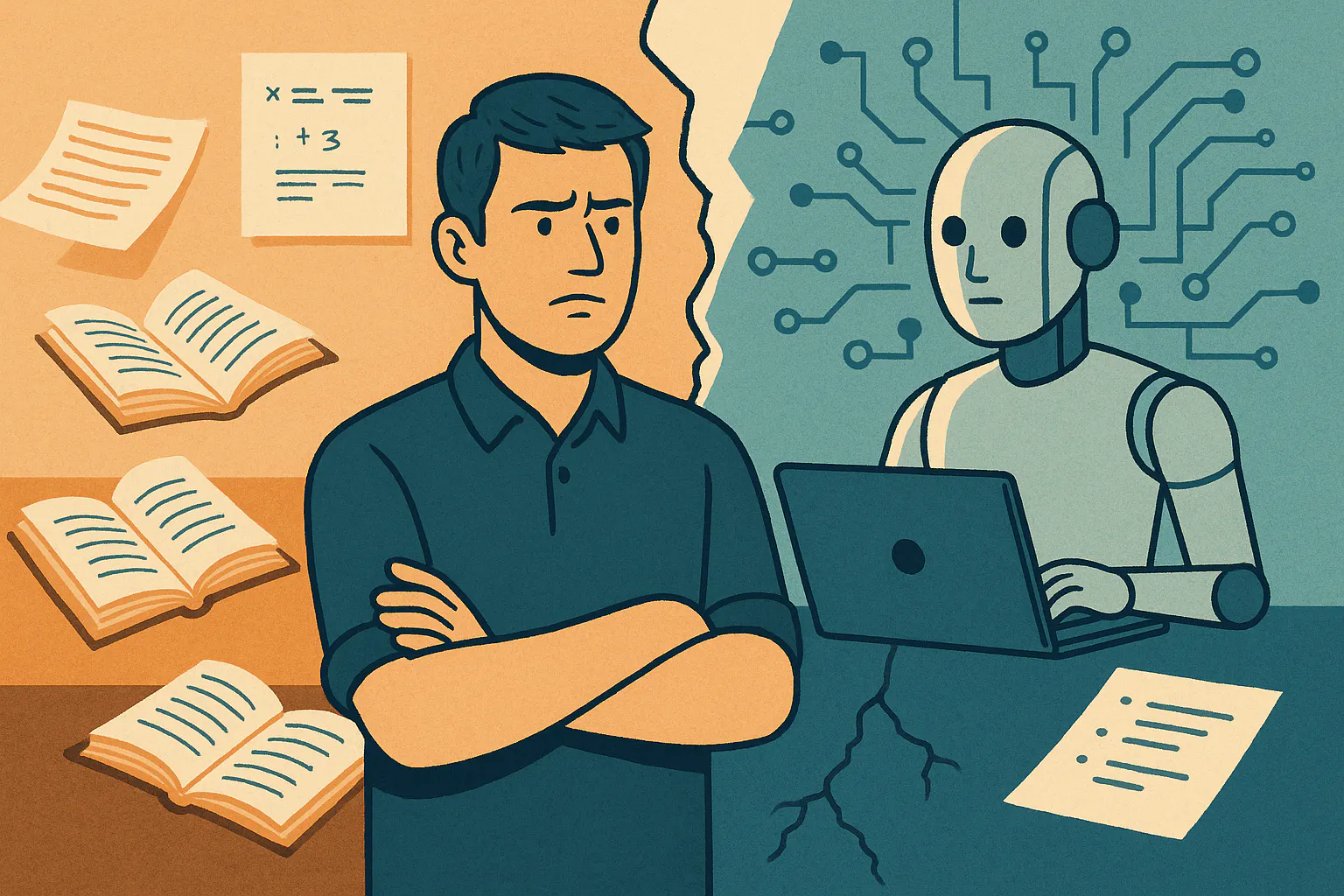
AI Is Changing the Way We Learn—and Why That’s a Good Thing
AI didn’t break education. It revealed the cracks we’ve ignored for too long.
by Ardis KadiuMay 20, 2025
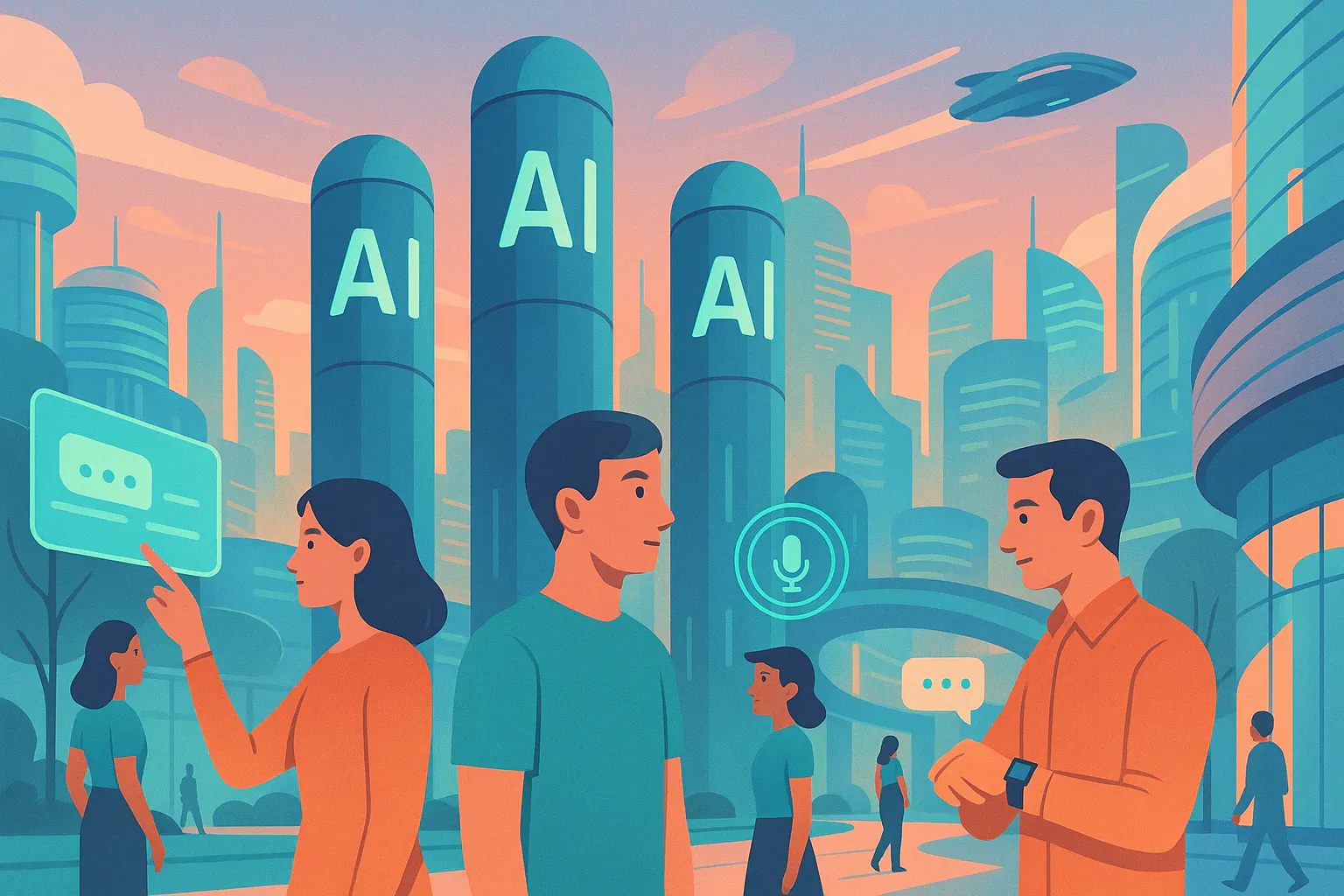
The week AI changed everything wasn’t fiction—it was June 2025. And my brain is still recovering!
Four tech giants—Microsoft, Google, OpenAI, and Anthropic—unveiled roadmaps that could redefine how we work, learn, and live. JC and I broke all of this down in episode 78 of Generation AI, and let me tell you, this is only the beginning.
At Build 2025, Microsoft introduced its boldest shift yet: “Agent OS.” Windows is no longer just your desktop—it’s your assistant. They introduced Windows Recall, Copilot Studio, and the Windows AI Foundry, which together form the foundation for building agents that live not just in the cloud, but right on your device. These agents will anticipate needs, remember context, and take actions on your behalf.
And that’s not just marketing speak. Microsoft adopting MCP (Model Context Protocol) means your AI assistant could remember what you were working on three days ago and help you pick up right where you left off. That’s real productivity.
Google showed up with force.. Between the release of Gemini 2.5, the LearnLM educational models, and the Veo 3 text-to-video tools, they’re clearly not playing catch-up anymore. In fact, in some areas—like education and creative tools—they might be pulling ahead.
Google Veo 3 was a jaw-dropper. It generates synchronized video and audio from a simple prompt. I tested their Flow tool over the weekend and created an entire scene—characters, voiceovers, everything. It felt like moviemaking powered by imagination.
But the announcement that could reshape the internet as we know it? Google’s AI Mode for Search. Forget 10 blue links—Google’s serving summaries, sources, charts, and even video explanations right in the search experience. If you’re in SEO or content strategy, it’s time to rethink… everything.
Speaking of rethinking, OpenAI made one of the boldest moves of all. They acquired the design firm led by none other than Jony Ive—the guy who helped invent the iPhone. This tells me everything I need to know: the next leap in AI isn’t just about smarter software. It’s about physical design. We’re not waiting for GPT-6—we’re waiting for the iPhone of AI.
Then there’s Anthropic. They released Claude 4—arguably the best coding model available—and doubled down on complex reasoning and agent workflows.
They also adopted MCP, joining Microsoft and Google in a push for interoperable agents. While others shouted, Anthropic whispered—and developers listened.
Their focus? Smarter tools. Better thinking. Fewer shortcuts.
Each of these companies is betting on a slightly different vision:
What ties them all together? Agents. Not just chatbots, but true AI assistants that can remember, reason, and take action across our digital and physical worlds.
In education, in business, in our daily lives—AI won’t be something we log into. It’ll be something we live alongside.
We’ll rely on it to recall conversations, generate content, debug code, summarize meetings, and anticipate what we need before we ask. And just like that, the interface becomes the intelligence.
This summer didn’t just hint at the future—it dropped the blueprint.
See more
AI didn’t break education. It revealed the cracks we’ve ignored for too long.

With the release of OpenAI’s new image generation tools, AI is becoming much more than a productivity booster—it’s becoming a true creative partner.
Element451 is the AI platform that moves every student forward. Element AI CRM and the Bolt Agent Platform take action across the student journey, from prospect to success. More than 400 institutions use Element451 to drive better enrollment and student outcomes.

Bridge the gap between the latest tech advancements and your institution's success.
Element451 is an AI-driven CRM and AI agent platform for higher education. Our friendly experts are here to help you explore how Element451 can improve outcomes for your school and students.
