

🎧 Innovation, Trust, and Change in Higher Ed with Daniella Nordin
Crafting unique brand differentiators, effective marketing, adult learners, and innovation.
by Sirley CarballoAugust 1, 2023
The EdUp Experience Podcast, hosted by Joe Sallustio, recently had the opportunity to interview numerous guests at the 2023 Engage Summit. One of the featured guests was J.C. Bonilla, Global Chief Analytics Officer at VaynerMedia and faculty member at NYU.
During the engaging conversation, Bonilla shared valuable insights on uncovering audiences' needs in higher education marketing and how the education industry can learn from successful marketing practices in other industries.
The discussion also shed light on the crucial role of data and analytics in providing a better student experience. Let's dive into the key takeaways from this enlightening conversation!
Bonilla and Sallustio started the conversation by acknowledging that the student experience is subjective and highly influenced by individual backgrounds. Bonilla compared it to walking into a cafeteria without knowing if you will be satisfied with your meal or how long it will take to get it.
This analogy highlighted the uncertainty students face when navigating their educational journeys. Bonilla stressed the need for guidance and support to help students effectively navigate this uncertain terrain. Unfortunately, there is still much work to be done in shaping the higher education experience for incoming classes.
Program relevance is more important than ever, and schools must constantly question whether educational programs are truly meeting the needs of their audiences. Many times, higher education institutions assume their offerings are the best without truly understanding why.
Relevance starts with listening and understanding that the tonality of a brand, the attributes of the program. At the end of the day, these groups, families, and students are shaping it, and it happens very rapidly at a scale that is uncontrolled, but at the same time, the opportunities are diverse.
Bonilla encouraged administrators and educators to adapt and stay informed about changes in student preferences and sensitivities to remain competitive.
Drawing from his experience in the marketing industry, Bonilla discussed the concept of loyalty and how it is often based on the product and experience rather than the brand itself.
He provided examples of loyalty to brands like Starbucks and Marriott, where customers are loyal to the product and the experience those brands consistently deliver.
Bonilla proposed viewing education as a product and suggested a shift in mindset towards seeing education as an offering that can improve loyalty. By focusing on delivering an exceptional student experience, higher education institutions can create brand loyalty that lasts beyond graduation.
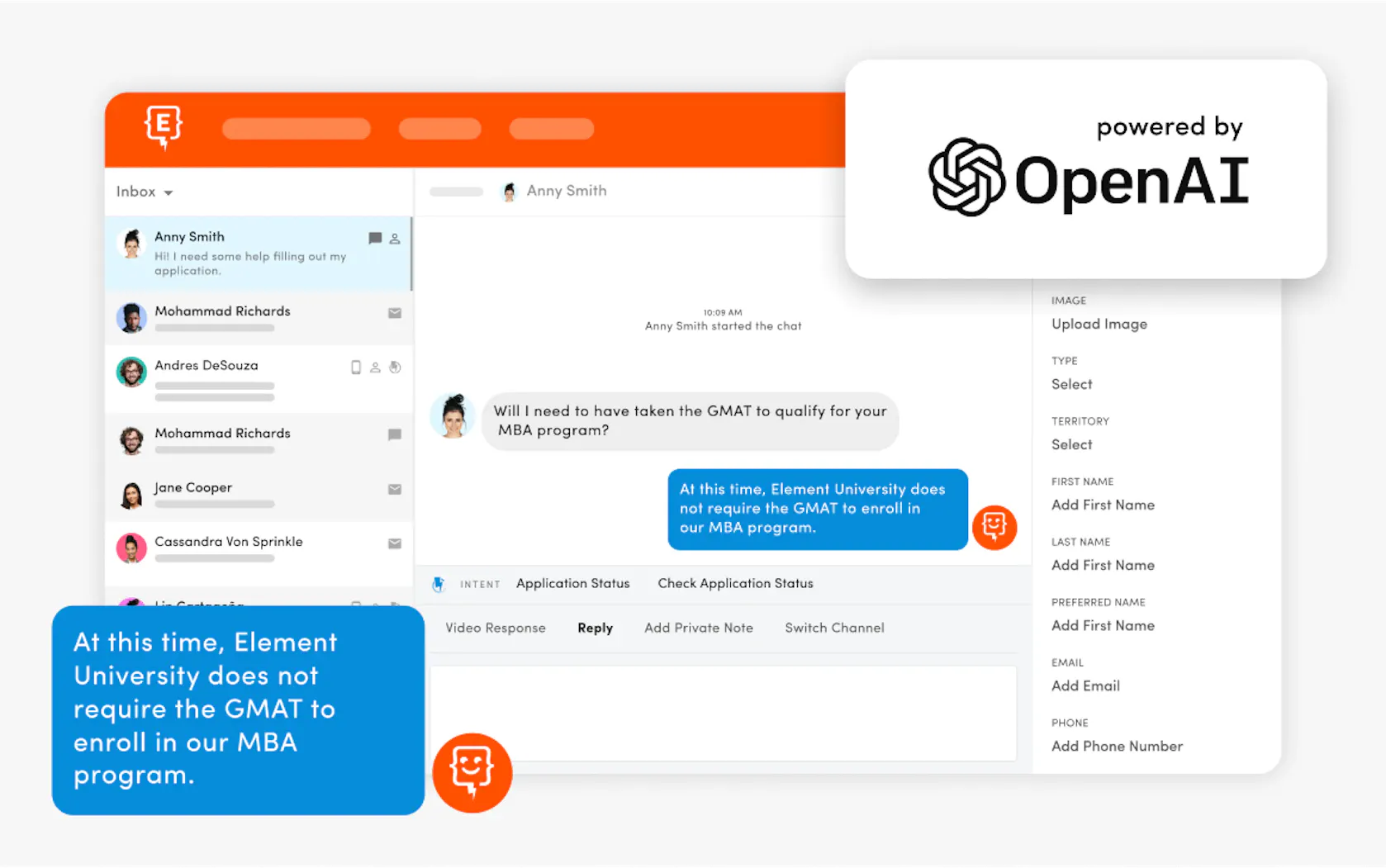
With its powerful and customizable platform, Element451 can provide an unparalleled level of support to institutions seeking to engage with their students in a more effective and dynamic way.
Bonilla discussed the concept of loyalty and impact within higher education, suggesting that only a small subset of faculty members (about 1%) are truly involved in creating loyalty and impact.
He emphasized the need to shift from individual impact to creating departmental or school-wide offerings that resonate with students.
There is a need to create artifacts that bring loyalty, and they're seen in the product, which in higher ed is the curriculum, the educational offering, and experience. It happens to all of us, that formative experience [in college]. So the potential to really craft experience in the student journey is immense.
By leveraging data and analytics, higher education institutions can better understand their audience's needs and preferences, enabling them to shape programs and offerings that are relevant and impactful.
Higher education institutions need to understand the importance of user-generated content and how it shapes brands. Universities lag behind in this regard, and the brand's tonality and attributes should be driven by the audience's perceptions and needs.
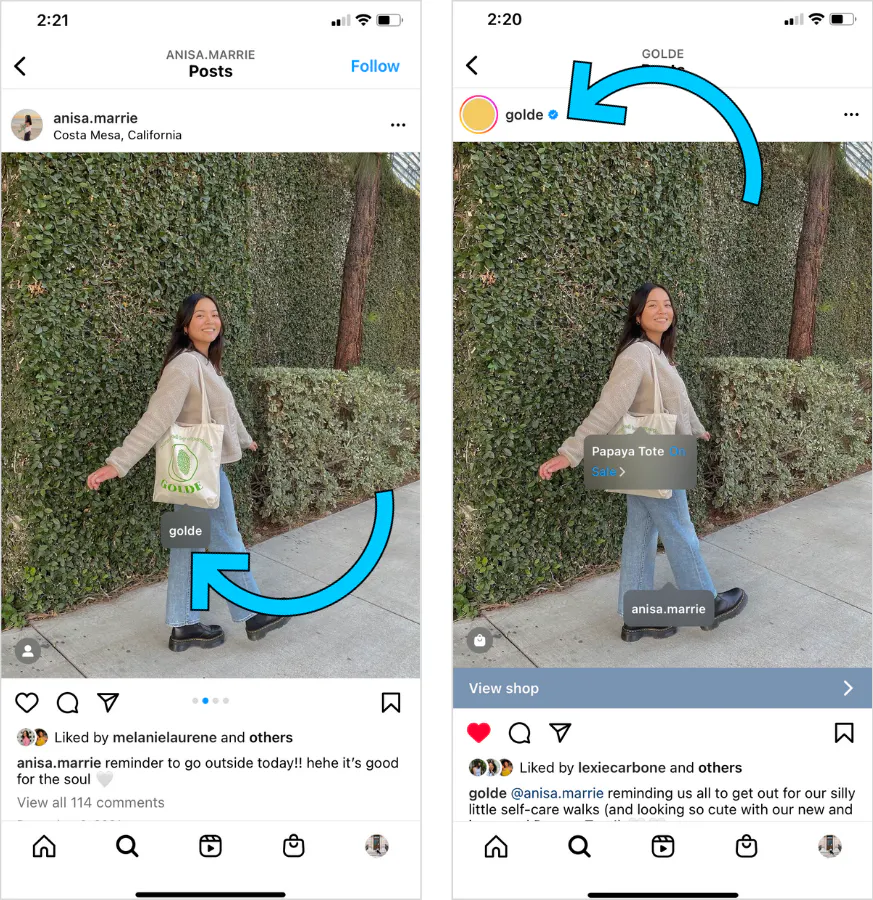
Example of a UGC Instagram post for the brand golde via Later.com
Higher education can leverage this with students and alumni to increase brand awareness and loyalty in various ways:
Listening to the audience and incorporating their preferences is crucial for staying relevant and competitive in the ever-evolving educational landscape.
Brand loyalty is a model based on the product and experience, not the brand itself. The brand is an attribution or a construct that emerges from your product and experience. So think about product attributes first and then you start building it.
By learning from successful marketing practices in other industries, embracing data and analytics, and focusing on creating memorable and impactful student experiences, higher education institutions can position themselves for success.
As higher education continues to evolve and face challenges, it is crucial to adapt and understand the ever-changing needs and preferences of students. By doing so, institutions can create loyalty, foster innovation, and shape the future of education.
To see how Element451 can help your institution increase brand loyalty and help you connect with today's students, schedule a call to see it in action.
See more
Crafting unique brand differentiators, effective marketing, adult learners, and innovation.

Insights on the shifting landscape of education, the power of AI, and the crucial role of collaboration.

Element451 is the AI platform that moves every student forward. Element AI CRM and the Bolt Agent Platform take action across the student journey, from prospect to success. More than 400 institutions use Element451 to drive better enrollment and student outcomes.

Bridge the gap between the latest tech advancements and your institution's success.
Element451 is an AI-driven CRM and AI agent platform for higher education. Our friendly experts are here to help you explore how Element451 can improve outcomes for your school and students.
